
What is digital marketing?
Digital marketing is the way businesses promote their products, services, or brands using online platforms like search engines, social media, websites, email, and mobile apps. In simple terms, it’s how brands connect with people in today’s digital world. As internet usage continues to grow rapidly across India and especially in Kerala, digital marketing has become a key driver of modern business growth. From startups and local shops to global brands, businesses now reach their audience where they spend most of their time, online.
In 2026, digital marketing is no longer optional; it’s essential. People search on Google, read reviews, watch videos, and explore brands on Instagram before making a purchase decision. A strong digital presence builds trust, increases visibility, and drives real business results. Unlike traditional marketing, digital marketing allows businesses to track performance in real time—measuring clicks, engagement, and conversions—making it a powerful, cost-effective strategy for growth.
Why Digital Marketing Is Important
Digital marketing is important because it helps businesses reach the right audience at the right time with the right message. Unlike traditional advertising like newspapers or billboards, digital platforms allow businesses to target specific people based on age, interests, behavior, and location. This makes marketing more effective and budget-friendly.
For example, a small boutique in Kerala can run Instagram ads targeting women aged 18-35 in a specific city. This allows small businesses to compete with bigger brands without a huge budget.
Digital marketing also helps build brand authority. By sharing valuable content, appearing on search results, and engaging with customers on social media, businesses gain trust. Over time, this trust leads to strong customer loyalty.

Key Components of Digital Marketing
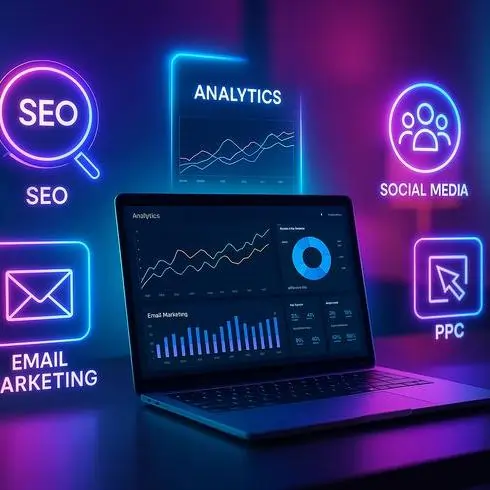
Digital marketing combines multiple strategies that work together to attract, engage, and convert customers online. Search Engine Optimization (SEO) helps websites rank higher on search engines, bringing consistent organic traffic without relying on paid advertisements. Modern SEO emphasizes user experience, high-quality content, voice search optimization, and mobile-friendly website design.
Social media marketing allows brands to connect directly with audiences through platforms where reels, stories, and short-form videos build engagement and strengthen brand awareness. Content marketing focuses on creating valuable blogs, videos, and infographics that educate audiences, answer questions, and build long-term trust. Email marketing nurtures leads through personalized campaigns and automated messages delivered at the right time. Pay-Per-Click advertising provides instant visibility through targeted ads.
Digital Marketing Trends and Best Practices for 2026
Digital marketing in 2026 is strongly shaped by artificial intelligence and automation. AI tools help businesses understand customer behavior, predict trends, and deliver more personalized content. While automation improves efficiency, maintaining a human touch is still essential because people connect more with authentic and relatable brands.
Video marketing continues to lead digital engagement, especially short-form content like reels and quick videos. Instead of direct selling, brands now focus on storytelling, sharing experiences, customer stories, and helpful information.
Voice search is also growing as more people use smart assistants, making natural and conversational content important. At the same time, transparency in data privacy is crucial, as customers expect brands to protect their information and build trust.
How Digital Marketing Builds Long-Term Growth
Digital marketing is not only about quick results; it focuses on building long-term brand value. Strategies like SEO bring consistent organic traffic, while content marketing builds trust and authority. Social media helps brands connect with audiences and build communities, and email marketing strengthens relationships with customers. When these strategies work together, businesses can achieve steady and sustainable growth.
Unlike traditional marketing, digital marketing is flexible and easy to adjust. If a campaign is not performing well, businesses can quickly change their targeting, content, or design to improve results.
In today’s competitive world, businesses that ignore digital marketing risk losing visibility. Consumers expect brands to have a strong online presence through a professional website, active social media, and valuable content.

Conclusion
Digital marketing is the strategic use of online channels to promote brands, connect with audiences, and drive measurable growth. It combines SEO, social media marketing, content creation, email campaigns, and paid advertising into a powerful system that delivers results. In 2026, success in digital marketing depends on adaptability, authenticity, data-driven decisions, and consistent engagement.
For businesses aiming to grow in a digital-first world, investing in digital marketing is not just a smart move; it is a necessity. By understanding its components, staying updated with trends, and implementing best practices, brands can build authority, attract loyal customers, and achieve sustainable success in the modern marketplace.